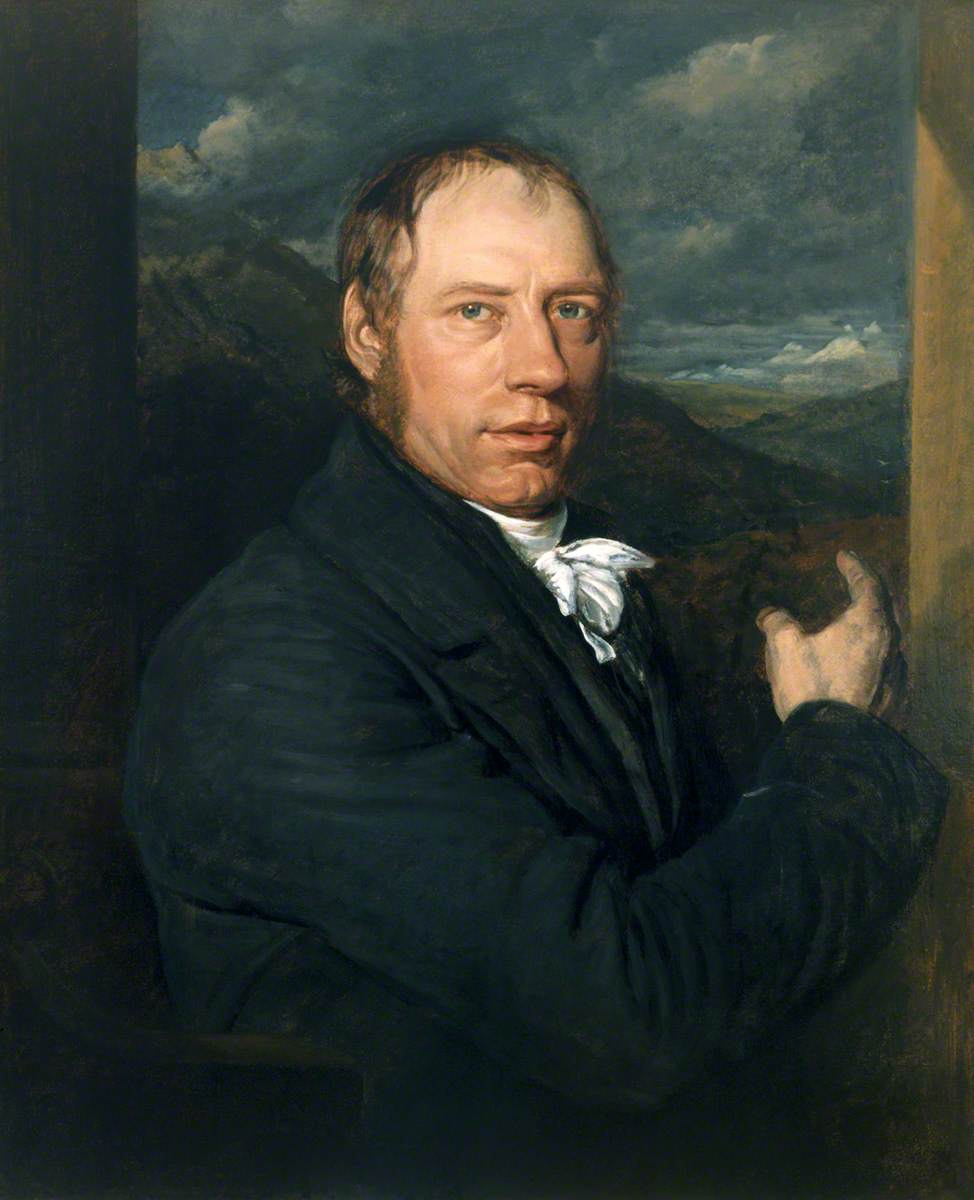
Richard Trevithick
High-pressure engine: cleanup, spelling fix, replaced: Hathi Trust → HathiTrust
| ← Previous revision | Revision as of 14:39, 20 April 2026 | ||
| Line 75: | Line 75: | ||
As his experience grew, he realised that improvements in [[boiler]] technology now permitted the safe production of high-pressure steam, which could move a [[piston]] in a steam engine on its own account, instead of using near-atmospheric pressure, in a condensing engine. He was not the first to think of so-called "strong steam" or steam of about {{Convert|30|psi||abbr=on|lk=in}}. [[William Murdoch]] had developed and demonstrated a model steam carriage in 1784 and [[William Murdoch#Steam powered locomotion|demonstrated it to Trevithick]] at his request in 1794. In fact, Trevithick lived next door to Murdoch in Redruth in 1797 and 1798. [[Oliver Evans]] in the U.S. had also concerned himself with the concept, but there is no indication that Trevithick knew of his ideas.{{cite journal|date=4 May 1861|title=The romance of the steam engine|journal=[[Scientific American]]|publisher=Munn and Co|location=New York|volume=IV|issue=18|page=277|quote=In Trevithick's boiler the feed water was heated by the exhaust steam, which some have supposed was an idea borrowed from Evans, but no proof has been adduced that the Cornish engineer had heard of the prior American invention. We therefore conclude that it was original with Trevithick, but he was not the first inventor.}} Independently of this, [[Arthur Woolf]] was experimenting with higher pressures whilst working as the Chief Engineer of the Griffin Brewery (proprietors Meux and Reid). This was an engine designed by Hornblower and Maberly, and the proprietors were looking to have the best steam engine in London. Around 1796, Woolf believed he could save substantial amounts of coal consumption. |
As his experience grew, he realised that improvements in [[boiler]] technology now permitted the safe production of high-pressure steam, which could move a [[piston]] in a steam engine on its own account, instead of using near-atmospheric pressure, in a condensing engine. He was not the first to think of so-called "strong steam" or steam of about {{Convert|30|psi||abbr=on|lk=in}}. [[William Murdoch]] had developed and demonstrated a model steam carriage in 1784 and [[William Murdoch#Steam powered locomotion|demonstrated it to Trevithick]] at his request in 1794. In fact, Trevithick lived next door to Murdoch in Redruth in 1797 and 1798. [[Oliver Evans]] in the U.S. had also concerned himself with the concept, but there is no indication that Trevithick knew of his ideas.{{cite journal|date=4 May 1861|title=The romance of the steam engine|journal=[[Scientific American]]|publisher=Munn and Co|location=New York|volume=IV|issue=18|page=277|quote=In Trevithick's boiler the feed water was heated by the exhaust steam, which some have supposed was an idea borrowed from Evans, but no proof has been adduced that the Cornish engineer had heard of the prior American invention. We therefore conclude that it was original with Trevithick, but he was not the first inventor.}} Independently of this, [[Arthur Woolf]] was experimenting with higher pressures whilst working as the Chief Engineer of the Griffin Brewery (proprietors Meux and Reid). This was an engine designed by Hornblower and Maberly, and the proprietors were looking to have the best steam engine in London. Around 1796, Woolf believed he could save substantial amounts of coal consumption. |
||
According to his son Francis, Trevithick was the first to make high-pressure steam work in England in 1799,{{cite book |title=Catalog Record: Life of Richard Trevithick, with an account... | |
According to his son Francis, Trevithick was the first to make high-pressure steam work in England in 1799,{{cite book |title=Catalog Record: Life of Richard Trevithick, with an account... | HathiTrust Digital Library |url=http://catalog.hathitrust.org/Record/001613878 |access-date=2017-04-30 |via=Catalog.hathitrust.org|year=1872 }} although other sources say he had invented his first high-pressure engine by 1797.{{cite web|url=https://www.asme.org/engineering-topics/articles/transportation/richard-trevithick |title=Richard Trevithick |website=Asme.org |access-date=2017-04-30}}{{cite web|author=L.T.C. Rolt |url=http://www.britannica.com/biography/Richard-Trevithick |title=Richard Trevithick | English engineer |website=Britannica.com |date=2014-01-07 |access-date=2017-04-30}} Not only would a high-pressure steam engine eliminate the condenser, but it would allow the use of a smaller cylinder, saving space and weight. He reasoned that his engine could now be lighter, more compact, and small enough to carry its own weight even with a carriage attached (this did not use the ''expansion'' of the steam, so-called "expansive working" came later). |
||
===Early experiments=== |
===Early experiments=== |
||