Median kingdom
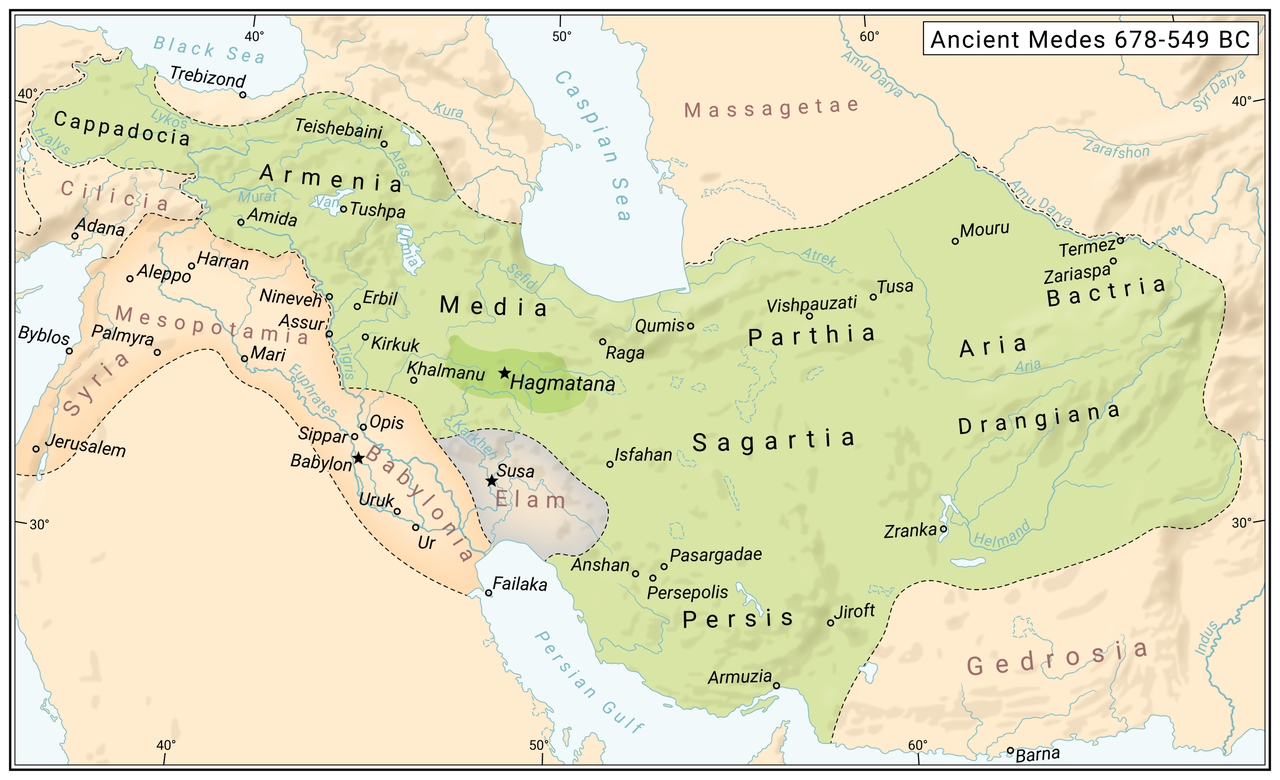
Median expansion: Missing word
| ← Previous revision | Revision as of 13:38, 20 April 2026 | ||
| Line 247: | Line 247: | ||
=== Median expansion === |
=== Median expansion === |
||
According to Herodotus, Phraortes was able extend the Median kingdom by conquering [[Persis|Persia]], which at that point was probably a fairly small state to the south of Media. The event is described as part of a broader wave of conquest, where Phraortes and his successors systematically subdued various princedoms along the Zagros range. However, the idea that Persia had been a "vassal" of Media rests on later classical sources only and is considered rather improbable by some scholars. In the Neo-Assyrian period, the main entity north of [[Elam]] was the kingdom of Ellipi, but its power seems to have declined, and it disappeared from historical records around 660 BCE. It's possible that, perhaps after the fall of Assyria, the Medes and Elamites might have filled the vacuum left by diminishing Ellipian power, but there is no historical evidence to indicate such. Relying on biblical sources, Zawadzki suggested Median dominance over Elam, as Elam would have been too weak after the Assyrian campaigns in the 640s. A similar conclusion, but with the acceptance of an earlier Babylonian domination, was reached by Dandamayev. Interpretations of passages from Jeremiah (Jer. 49:34-38) and Ezekiel (Ezek. 32:24-25), which hint at Elam being subjugated, are difficult and likely not intended as precise historical statements. Since textual and archaeological evidence from Iran does not lend any support to a Median domination of [[Khuzestan province|Khuzestan]] and both biblical and Babylonian sources do not explicitly mention Media's overlordship over Elam, the idea faces much skepticism. |
According to Herodotus, Phraortes was able to extend the Median kingdom by conquering [[Persis|Persia]], which at that point was probably a fairly small state to the south of Media. The event is described as part of a broader wave of conquest, where Phraortes and his successors systematically subdued various princedoms along the Zagros range. However, the idea that Persia had been a "vassal" of Media rests on later classical sources only and is considered rather improbable by some scholars. In the Neo-Assyrian period, the main entity north of [[Elam]] was the kingdom of Ellipi, but its power seems to have declined, and it disappeared from historical records around 660 BCE. It's possible that, perhaps after the fall of Assyria, the Medes and Elamites might have filled the vacuum left by diminishing Ellipian power, but there is no historical evidence to indicate such. Relying on biblical sources, Zawadzki suggested Median dominance over Elam, as Elam would have been too weak after the Assyrian campaigns in the 640s. A similar conclusion, but with the acceptance of an earlier Babylonian domination, was reached by Dandamayev. Interpretations of passages from Jeremiah (Jer. 49:34-38) and Ezekiel (Ezek. 32:24-25), which hint at Elam being subjugated, are difficult and likely not intended as precise historical statements. Since textual and archaeological evidence from Iran does not lend any support to a Median domination of [[Khuzestan province|Khuzestan]] and both biblical and Babylonian sources do not explicitly mention Media's overlordship over Elam, the idea faces much skepticism. |
||
The Median kingdom probably annexed [[Mannaea]] to its territory in the aftermath of the Assyrians' defeat in a battle in 616 BCE.{{cite journal |date=2023-01-25 |doi=10.36253/asiana-1746 |first=Yousef |issn=2611-8912 |last=Hassanzadeh |pages=13–46 |periodical=Asia Anteriore Antica. Journal of Ancient Near Eastern Cultures |title=An Archaeological View to the Mannaean Kingdom |volume=4 |doi-access=free }} The Median involvement with [[Assyrian homeland|Assyria]] from 615 to 610 is marked by three, possibly four, campaigns, each of which concluded with the sack of an important city. The Medes' departure after each conquest suggests a lack of interest in political control over the heartland of the former Assyrian empire. [[Julian Reade]] posits that the Assyrian provinces within the Zagros, like Mazamua, and perhaps the upper Tigris regions of Tušhan and Šupria, were the only ones more suitable for Median expansion due to their familiarity to the Median territory. Nonetheless it is sometimes suggested that the Medes took control of the Assyrian heartland as claimed by later Greek sources. Herodotus (1, 106), writing about 450 BCE, that Cyaxares conquered all Assyria; whatever was meant by Assyria in this context, this may imply at most a remote suzerainty of the kind described by Herodotus (1, 134). Ctesias, around 400 BCE, mentions resettlement of Nineveh under Median rule. Xenophon, who travelled through the country in 401 BCE, regard metropolitan Assyria as part of Media. He also says that Nimrud and Nineveh were former Median cities conquered by the Persians. The relevance of these informations for the situation in the 6th century BCE is questionable. The ''Babylonian Chronicle'' records that in 547 the Persian king Cyrus passed through Arbela (modern Erbil) on his way to attack a kingdom whose name is damaged but which is often supposed to have been Lydia. It has been argued that the crossing of the Tigris downstream from Arbela is evidence that this region towards the Lesser Zab was controlled by the Persians suggesting previous Median control of the region, whereas the territory south of this river was Babylonian. However, it's possible that the Chronicle only mentions the route taken by Cyrus because he was passing through Babylonian territory, with or without permission. Xenophon's identification of the east bank of the Tigris north of Baghdad as 'Media' and Herodotus' mention of the lowland [[Matiene]] (5. 52. 5) remain questionable in terms of historical Median control west of the Zagros. The primary evidence of Median presence in the Mesopotamian lowlands any time after 610 BCE revolves around Harran. The Nabonidus inscriptions indicates that Harran was vulnerable to incursions by the Medes in the 550s BCE, although this may have occurred at other times. The Medes are described by Nabonidus as responsible for the destruction of the Ehulhul in Harran and as an impediment to his desired reconstruction work there. This implies that the Medes controlled the temple and thus Harran itself. However, the Babylonian Chronicle records the conquest of Harran in 610 BCE, and implies Babylonian control there. Some scholars favors the chronicle’s account, emphasizing the propagandistic elements of Nabonidus’ inscriptions. Around 550 BCE, Cyrus conquered [[Gutium]], which suggests that there was a region in the Western Zagros not under Median control at that time, although the exact location of Gutium remains elusive. The role of [[Gobryas (general)|Ugbaru of Gutium]] as a supporter of Cyrus may arise from Gutium having only recently rejected Median authority. |
The Median kingdom probably annexed [[Mannaea]] to its territory in the aftermath of the Assyrians' defeat in a battle in 616 BCE.{{cite journal |date=2023-01-25 |doi=10.36253/asiana-1746 |first=Yousef |issn=2611-8912 |last=Hassanzadeh |pages=13–46 |periodical=Asia Anteriore Antica. Journal of Ancient Near Eastern Cultures |title=An Archaeological View to the Mannaean Kingdom |volume=4 |doi-access=free }} The Median involvement with [[Assyrian homeland|Assyria]] from 615 to 610 is marked by three, possibly four, campaigns, each of which concluded with the sack of an important city. The Medes' departure after each conquest suggests a lack of interest in political control over the heartland of the former Assyrian empire. [[Julian Reade]] posits that the Assyrian provinces within the Zagros, like Mazamua, and perhaps the upper Tigris regions of Tušhan and Šupria, were the only ones more suitable for Median expansion due to their familiarity to the Median territory. Nonetheless it is sometimes suggested that the Medes took control of the Assyrian heartland as claimed by later Greek sources. Herodotus (1, 106), writing about 450 BCE, that Cyaxares conquered all Assyria; whatever was meant by Assyria in this context, this may imply at most a remote suzerainty of the kind described by Herodotus (1, 134). Ctesias, around 400 BCE, mentions resettlement of Nineveh under Median rule. Xenophon, who travelled through the country in 401 BCE, regard metropolitan Assyria as part of Media. He also says that Nimrud and Nineveh were former Median cities conquered by the Persians. The relevance of these informations for the situation in the 6th century BCE is questionable. The ''Babylonian Chronicle'' records that in 547 the Persian king Cyrus passed through Arbela (modern Erbil) on his way to attack a kingdom whose name is damaged but which is often supposed to have been Lydia. It has been argued that the crossing of the Tigris downstream from Arbela is evidence that this region towards the Lesser Zab was controlled by the Persians suggesting previous Median control of the region, whereas the territory south of this river was Babylonian. However, it's possible that the Chronicle only mentions the route taken by Cyrus because he was passing through Babylonian territory, with or without permission. Xenophon's identification of the east bank of the Tigris north of Baghdad as 'Media' and Herodotus' mention of the lowland [[Matiene]] (5. 52. 5) remain questionable in terms of historical Median control west of the Zagros. The primary evidence of Median presence in the Mesopotamian lowlands any time after 610 BCE revolves around Harran. The Nabonidus inscriptions indicates that Harran was vulnerable to incursions by the Medes in the 550s BCE, although this may have occurred at other times. The Medes are described by Nabonidus as responsible for the destruction of the Ehulhul in Harran and as an impediment to his desired reconstruction work there. This implies that the Medes controlled the temple and thus Harran itself. However, the Babylonian Chronicle records the conquest of Harran in 610 BCE, and implies Babylonian control there. Some scholars favors the chronicle’s account, emphasizing the propagandistic elements of Nabonidus’ inscriptions. Around 550 BCE, Cyrus conquered [[Gutium]], which suggests that there was a region in the Western Zagros not under Median control at that time, although the exact location of Gutium remains elusive. The role of [[Gobryas (general)|Ugbaru of Gutium]] as a supporter of Cyrus may arise from Gutium having only recently rejected Median authority. |
||