Lin Yutang

| ← Previous revision | Revision as of 10:10, 20 April 2026 | ||
| Line 76: | Line 76: | ||
==Legacy== |
==Legacy== |
||
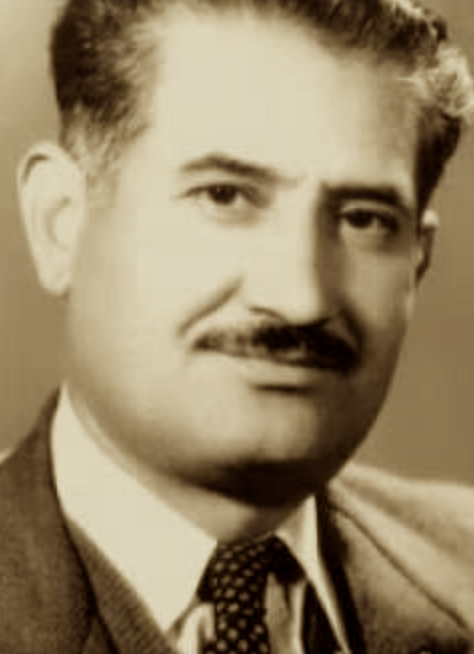
[[File:Lin Yutang.jpg|left|thumb|Lin Yutang as pictured in ''[[The Most Recent Biographies of Chinese Dignitaries]]'']] |
[[File:Lin Yutang.jpg|left|thumb|Lin Yutang as pictured in ''[[The Most Recent Biographies of Chinese Dignitaries]]'']] |
||
Although his major books have remained in print, Lin was a thinker whose place in modern [[Chinese intellectual history]] has been overlooked.William Sima, "New Scholarship: The Cross-Cultural Legacy of Lin Yutang in China and America," China Heritage Quarterly 29 (2012). {{Cite web |title=The Cross-cultural Legacy of Lin Yutang | China Heritage Quarterly |url=http://chinaheritagenewsletter.anu.edu.au/scholarship.php?searchterm=029_sima.inc&issue=029 |url-status=dead |archive-url=https://archive.today/20121129192030/http://chinaheritagenewsletter.anu.edu.au/scholarship.php?searchterm=029_sima.inc&issue=029 |archive-date=2012-11-29 |access-date=2012-08-27}} Lin themed conventions have been organized in Taiwan and Lin's native Fujian, and in December 2011, the International Conference on the Cross-cultural Legacy of Lin Yutang in China and America was held at City University of Hong Kong, with professional and private scholars from mainland China, Hong Kong, Taiwan, Japan, Malaysia, the United States, Germany and Slovakia. The organizer of the conference was Dr. Qian Suoqiao, author of the book, ''Liberal Cosmopolitan: Lin Yutang and Middling Chinese Modernity'' (Leiden; Boston: Brill, 2010).[http://ctl.cityu.edu.hk/Portal_Root/subsites/conferences/2011/dec/LinYutang/ International Conference on the Cross-cultural Legacy of Lin Yutang in China and America] |
Although his major books have remained in print, Lin was a thinker whose place in modern [[Chinese intellectual history]] has been overlooked.William Sima, "New Scholarship: The Cross-Cultural Legacy of Lin Yutang in China and America," China Heritage Quarterly 29 (2012). {{Cite web |title=The Cross-cultural Legacy of Lin Yutang | China Heritage Quarterly |url=http://chinaheritagenewsletter.anu.edu.au/scholarship.php?searchterm=029_sima.inc&issue=029 |url-status=dead |archive-url=https://archive.today/20121129192030/http://chinaheritagenewsletter.anu.edu.au/scholarship.php?searchterm=029_sima.inc&issue=029 |archive-date=2012-11-29 |access-date=2012-08-27}} (bropken link) Lin themed conventions have been organized in Taiwan and Lin's native Fujian, and in December 2011, the International Conference on the Cross-cultural Legacy of Lin Yutang in China and America was held at City University of Hong Kong, with professional and private scholars from mainland China, Hong Kong, Taiwan, Japan, Malaysia, the United States, Germany and Slovakia. The organizer of the conference was Dr. Qian Suoqiao, author of the book, ''Liberal Cosmopolitan: Lin Yutang and Middling Chinese Modernity'' (Leiden; Boston: Brill, 2010).[http://ctl.cityu.edu.hk/Portal_Root/subsites/conferences/2011/dec/LinYutang/ International Conference on the Cross-cultural Legacy of Lin Yutang in China and America] (broken link) |
||
The first full-length academic study of Lin in English is Diran John Sohigian's "The Life and Times of Lin Yutang" (Columbia University Ph.D. diss., 1991). Jing Tsu, ''Sound and Script in Chinese Diaspora'' (Cambridge, MA: Harvard University Press, 2010) and Thomas S. Mullaney, ''The Chinese Typewriter: A History'' (Cambridge, MA: The MIT Press, 2017) give a detailed accounts of Lin Yutang in the context of late 19th century script reform, Chinese national language reform in the early twentieth century and [[machine translation]] research during the [[Cold War]].{{Citation needed|date=March 2026}} |
The first full-length academic study of Lin in English is Diran John Sohigian's "The Life and Times of Lin Yutang" (Columbia University Ph.D. diss., 1991). Jing Tsu, ''Sound and Script in Chinese Diaspora'' (Cambridge, MA: Harvard University Press, 2010) and Thomas S. Mullaney, ''The Chinese Typewriter: A History'' (Cambridge, MA: The MIT Press, 2017) give a detailed accounts of Lin Yutang in the context of late 19th century script reform, Chinese national language reform in the early twentieth century and [[machine translation]] research during the [[Cold War]].{{Citation needed|date=March 2026}} |
||