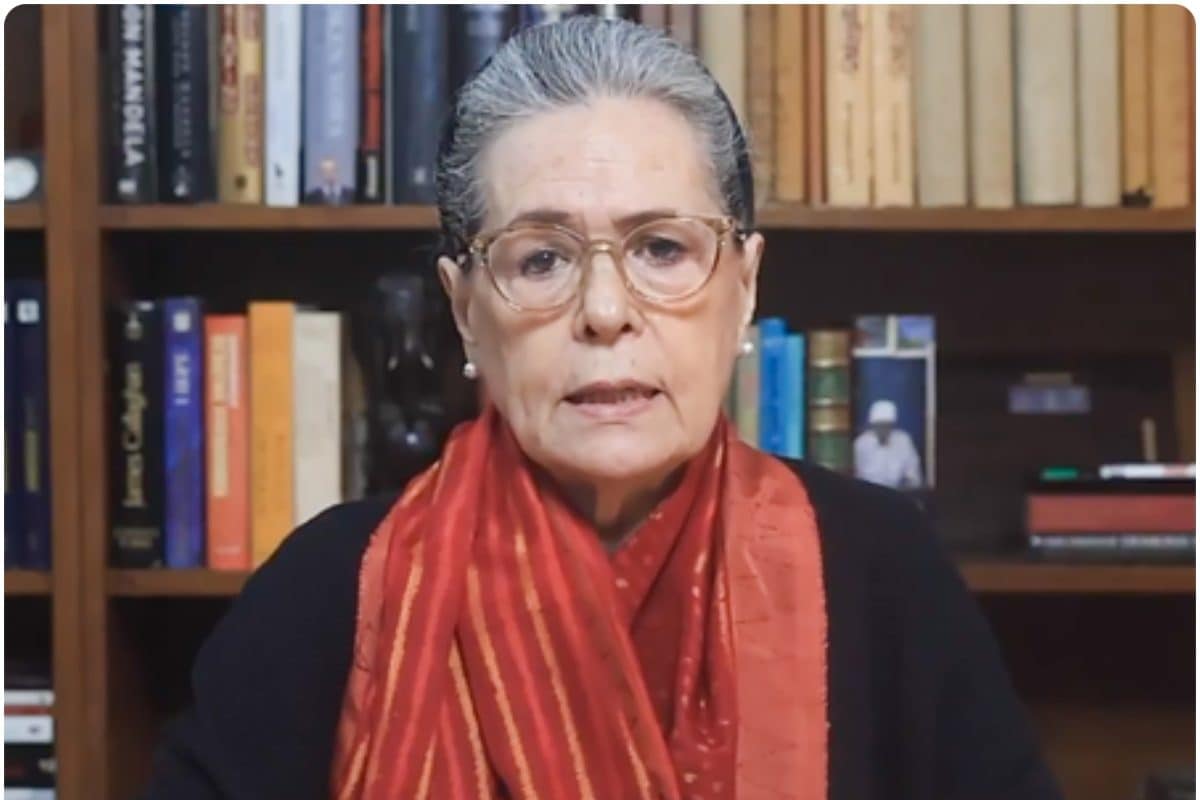
David Voas

Restored revision 1306357850 by Waacstats (talk): Unsourced, and a very unnecessarily detailed list of works in any case
| ← Previous revision | Revision as of 23:07, 19 April 2026 | ||
| Line 63: | Line 63: | ||
Voas was Professor of Population Studies in the Institute for Social and Economic Research at the University of Essex from November 2011 to January 2016. He took up his present position at UCL in February 2016. |
Voas was Professor of Population Studies in the Institute for Social and Economic Research at the University of Essex from November 2011 to January 2016. He took up his present position at UCL in February 2016. |
||
===Notable ideas=== |
|||
Voas has proposed a specific version of [[secularization]] theory called [[secular transition]][https://www.seculartransition.org]. This theory holds that modernising countries will at a certain point in time start a process of declining religion lasting roughly 200 years. |
|||
===Selected works=== |
|||
*Voas, D. (2025) Invisible secularity: American theism beyond belief. Social Forces 104(1): 366-85. |
|||
*Voas, D. (2023) Sex, value change and the erosion of religious adherence. Religion, Brain & Behavior. |
|||
*Voas, D. & Storm, I. (2021) National context, parental socialization, and the varying relationship between religious belief and practice. Journal for the Scientific Study of Religion 60(1): 189-97. |
|||
*Olson, DVA, Jung, JH, Marshall, J & Voas, D. (2020) Sacred canopies or religious markets? The effect of county-level religious diversity on later changes in religious involvement. Journal for the Scientific Study of Religion 59(2): 227-46. [Received the 2021 Best Article award from the International Society for the Sociology of Religion] |
|||
*Voas, D. & Chaves, M. (2016) Is the United States a counterexample to the secularization thesis? American Journal of Sociology 121(5): 1517-56. [Received the 2017 Distinguished Article award from the Society for the Scientific Study of Religion] |
|||
*Voas, D. & Fleischmann, F. (2012) Islam moves west: Religious change in the first and second generations. Annual Review of Sociology 38: 525-45. |
|||
*Ward, C. & Voas, D. (2011) The emergence of conspirituality. Journal of Contemporary Religion 26(1): 103-21. |
|||
*Voas, D. (2009) The rise and fall of fuzzy fidelity in Europe. European Sociological Review 25(2): 155-68. [Received the 2010 Distinguished Article award from the Society for the Scientific Study of Religion] |
|||
*Voas, D. (2007) The continuing secular transition, in The Role of Religion in Modern Societies, ed. D Pollack and DVA Olson. Routledge, pp. 25-48. |
|||
*Crockett, A. & Voas, D. (2006) Generations of decline: Religious change in twentieth-century Britain. Journal for the Scientific Study of Religion 45(4): 567-84. |
|||
*Voas, D. & Crockett, A. (2005) Religion in Britain: Neither believing nor belonging. Sociology 39(1): 11-28. |
|||
*Voas, D. (2003) Intermarriage and the demography of secularisation. British Journal of Sociology 54(1): 83-108. |
|||
*Voas, D., Olson, DVA & Crockett, A. (2002) Religious pluralism and participation: Why previous research is wrong. American Sociological Review 67(2): 212-30. |
|||
==References== |
==References== |
||