Walcheren Campaign
Campaign
| ← Previous revision | Revision as of 06:28, 25 April 2026 | ||
| Line 66: | Line 66: | ||
The expedition was called off in early September. Around 12,000 troops stayed on Walcheren, but by October only 5,500 remained fit for duty.{{fact|date=May 2022}} The French had no great opportunity to eliminate Chatham's army, since the [[Body of water|waterbodies]] were defended by the [[Battle of Trafalgar|dominant]] British navy; and it is also worth noting that Bernadotte was generally a cautious army commander, as his subsequent actions in the [[German campaign of 1813]] showed. It was precisely in the first half of September that Bernadotte was replaced by Marshal [[Jean-Baptiste Bessières]], the Duke of [[Istria]]. Earlier, at [[Battle of Jena–Auerstedt|Auerstedt]] in 1806, Bernadotte had let Napoleon down by omitting this battle, allowing the Prussians to inflict greater losses on [[Louis-Nicolas Davout|Davout]]'s French and the opportunity to escape. Bernadotte missed [[Battle of Eylau|Eylau]] in 1807; he also launched two unsuccessful attacks at [[Battle of Wagram|Wagram]] in 1809, and there would have been no need for the second one at all if not for his actions.{{sfn|Chandler|2000|pp=28-29}} Napoleon's distrust of Bernadotte even led him to dispatch General [[Honoré Charles Reille|Reille]] to keep a keen eye on him in Antwerp. When Bernadotte stated in his news bulletin that "his 15,000 men would be enough to repel any British number," Napoleon said: |
The expedition was called off in early September. Around 12,000 troops stayed on Walcheren, but by October only 5,500 remained fit for duty.{{fact|date=May 2022}} The French had no great opportunity to eliminate Chatham's army, since the [[Body of water|waterbodies]] were defended by the [[Battle of Trafalgar|dominant]] British navy; and it is also worth noting that Bernadotte was generally a cautious army commander, as his subsequent actions in the [[German campaign of 1813]] showed. It was precisely in the first half of September that Bernadotte was replaced by Marshal [[Jean-Baptiste Bessières]], the Duke of [[Istria]]. Earlier, at [[Battle of Jena–Auerstedt|Auerstedt]] in 1806, Bernadotte had let Napoleon down by omitting this battle, allowing the Prussians to inflict greater losses on [[Louis-Nicolas Davout|Davout]]'s French and the opportunity to escape. Bernadotte missed [[Battle of Eylau|Eylau]] in 1807; he also launched two unsuccessful attacks at [[Battle of Wagram|Wagram]] in 1809, and there would have been no need for the second one at all if not for his actions.{{sfn|Chandler|2000|pp=28-29}} Napoleon's distrust of Bernadotte even led him to dispatch General [[Honoré Charles Reille|Reille]] to keep a keen eye on him in Antwerp. When Bernadotte stated in his news bulletin that "his 15,000 men would be enough to repel any British number," Napoleon said: |
||
"This is the first occasion on which a General has been known to betray his position by an excess of vanity." ''(The implication here is that Bernadotte ostensibly revealed his |
"This is the first occasion on which a General has been known to betray his position by an excess of vanity." ''(The implication here is that Bernadotte ostensibly revealed his strength because this information could easily fall into enemy hands.)''{{cite web |url=https://www.frenchempire.net/biographies/bernadotte/ |author=Nathan D. Jensen |date=January 2021 |title=Marshal Jean Baptiste Jules de Bernadotte}}{{sfn|Chandler|2000|pp=28-29}} |
||
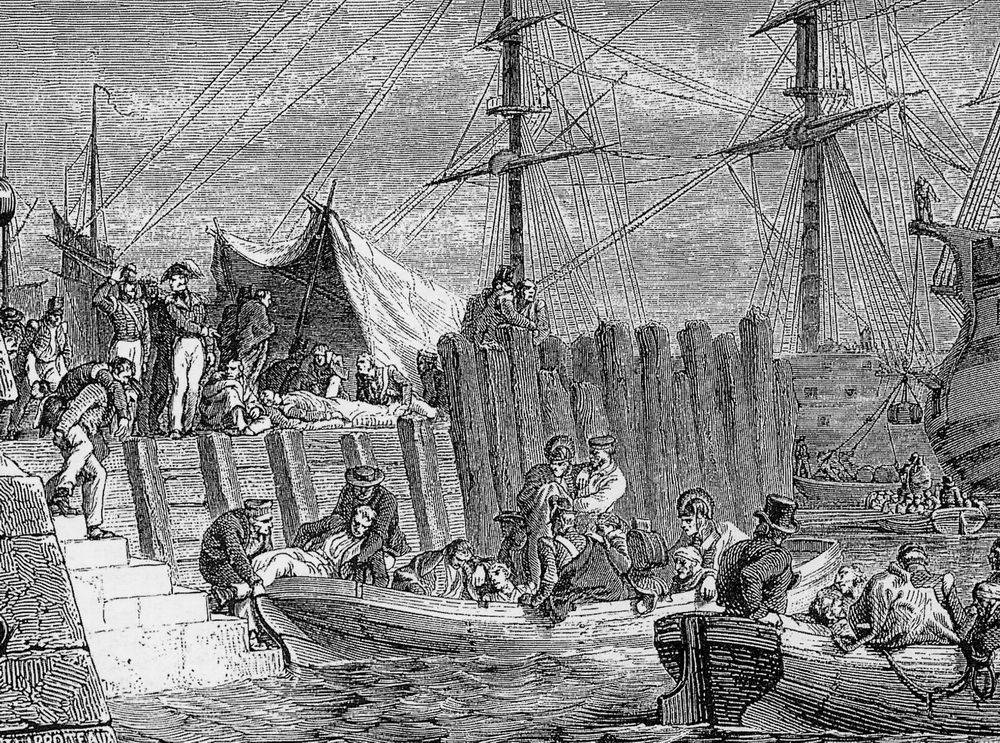
On 24 December, the remnants of Chatham's army, encircled by superior French forces, having destroyed the port facilities of Flushing, boarded ships.{{sfn|Novitsky|1911|pp=228-229}} |
On 24 December, the remnants of Chatham's army, encircled by superior French forces, having destroyed the port facilities of Flushing, boarded ships.{{sfn|Novitsky|1911|pp=228-229}} |
||