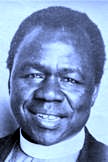
J. Nigro Sansonese

Disambiguating links to Esoteric (link changed to wikt:esoteric) using DisamAssist.
| ← Previous revision | Revision as of 00:55, 23 April 2026 | ||
| Line 14: | Line 14: | ||
In addition to his work in print Sansonese has discussed his theory of [[mythopoesis]] (Gk., "story making") in a lengthy 1994 video interview with San Francisco psychologist Jeffrey Mishlove of the series ''Thinking Allowed'' (PBS).{{cite web |url= https://www.youtube.com/watch?v=UFM2x9uCUP4. |title= Excerpt from Interview with J. Nigro Sansonese |author= Jeffrey Mishlove (December 1994) |website= [[YouTube]] |date= August 30, 2010 |accessdate= September 11, 2013}} |
In addition to his work in print Sansonese has discussed his theory of [[mythopoesis]] (Gk., "story making") in a lengthy 1994 video interview with San Francisco psychologist Jeffrey Mishlove of the series ''Thinking Allowed'' (PBS).{{cite web |url= https://www.youtube.com/watch?v=UFM2x9uCUP4. |title= Excerpt from Interview with J. Nigro Sansonese |author= Jeffrey Mishlove (December 1994) |website= [[YouTube]] |date= August 30, 2010 |accessdate= September 11, 2013}} |
||
Nigro Sansonese's mythology, elaborated in ''The Body of Myth: Mythology, Shamanic Trance, and the Sacred Geography of the Body'' (1994), might be summarized as follows: Early myth-making (before, say, 5000 BC) among archaic peoples—especially but not exclusively [[Indo-European languages|Indo-European]] speakers—may have originated in an [[esoteric]] oral ''cephelosophy'' or "skull wisdom" automatically imparted, primarily to young men at the age of puberty, in secret [[initiation]] rituals, during which venerated ancestral skulls might have been displayed for purposes of illustrating the meaning of particular myths. Recent excavations at [[Göbekli Tepe]] in southeastern Turkey, the oldest known site of religious architecture in the world (c. 10,000 BC), have revealed that a skull cult may indeed have been centered there for nearly 2000 years.Gresky, Julia; Haelm, Juliane; Clare, Lee (June 28, 2017): "Modified human crania from Göbekli Tepe provide evidence for a new form of Neolithic skull cult," ''Science Advances'' 3 (6). |
Nigro Sansonese's mythology, elaborated in ''The Body of Myth: Mythology, Shamanic Trance, and the Sacred Geography of the Body'' (1994), might be summarized as follows: Early myth-making (before, say, 5000 BC) among archaic peoples—especially but not exclusively [[Indo-European languages|Indo-European]] speakers—may have originated in an [[wikt:esoteric|esoteric]] oral ''cephelosophy'' or "skull wisdom" automatically imparted, primarily to young men at the age of puberty, in secret [[initiation]] rituals, during which venerated ancestral skulls might have been displayed for purposes of illustrating the meaning of particular myths. Recent excavations at [[Göbekli Tepe]] in southeastern Turkey, the oldest known site of religious architecture in the world (c. 10,000 BC), have revealed that a skull cult may indeed have been centered there for nearly 2000 years.Gresky, Julia; Haelm, Juliane; Clare, Lee (June 28, 2017): "Modified human crania from Göbekli Tepe provide evidence for a new form of Neolithic skull cult," ''Science Advances'' 3 (6). |
||
The aboriginal inspiration for myth, Sansonese argues, lay in heightened [[awareness]] (see '''[[proprioception]]''') of certain internal bodily activities important in religiously oriented [[meditation]]. The means of heightening proprioception are closely guarded meditative techniques orally communicated from teacher ([[adept]]) to student, in particular but not exclusively, techniques associated with [[Respiration (physiology)|respiration]]. |
The aboriginal inspiration for myth, Sansonese argues, lay in heightened [[awareness]] (see '''[[proprioception]]''') of certain internal bodily activities important in religiously oriented [[meditation]]. The means of heightening proprioception are closely guarded meditative techniques orally communicated from teacher ([[adept]]) to student, in particular but not exclusively, techniques associated with [[Respiration (physiology)|respiration]]. |
||