
Cho Man-sik
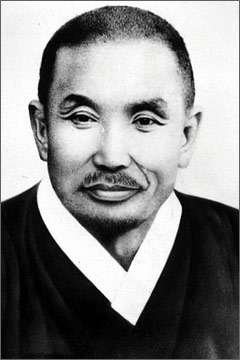
Post-World War II activism
| ← Previous revision | Revision as of 18:24, 22 April 2026 | ||
| Line 100: | Line 100: | ||
When the [[Soviet Civil Administration]] arrived in Pyongyang following the [[surrender of Japan|Japanese surrender]] they hoped they could influence Cho Man-sik. Cho was at this time the most popular leader in Pyongyang due mainly to his constant resistance to the Japanese and his formation of the Korean Products Promotions Society.{{sfn|Lankov|2002|p=14}}{{sfn|Wells|1990|p=137}} Soviet officers regularly met with Cho and tried to convince him to head the emerging North Korea administration. Cho however disliked communism and did not trust foreign powers.{{sfn|Lankov|2002|p=14}} Cho Man-sik would have agreed to co-operate with the Soviet authorities only on his own terms, such as extensive autonomy. Cho's conditions were not accepted by the Soviet leaders and supervisors. Despite his rejection of Soviet requests he was able to remain as chairman of the South P'yŏngan People's Committee.{{sfn|Lankov|2002|p=14}} |
When the [[Soviet Civil Administration]] arrived in Pyongyang following the [[surrender of Japan|Japanese surrender]] they hoped they could influence Cho Man-sik. Cho was at this time the most popular leader in Pyongyang due mainly to his constant resistance to the Japanese and his formation of the Korean Products Promotions Society.{{sfn|Lankov|2002|p=14}}{{sfn|Wells|1990|p=137}} Soviet officers regularly met with Cho and tried to convince him to head the emerging North Korea administration. Cho however disliked communism and did not trust foreign powers.{{sfn|Lankov|2002|p=14}} Cho Man-sik would have agreed to co-operate with the Soviet authorities only on his own terms, such as extensive autonomy. Cho's conditions were not accepted by the Soviet leaders and supervisors. Despite his rejection of Soviet requests he was able to remain as chairman of the South P'yŏngan People's Committee.{{sfn|Lankov|2002|p=14}} |
||
On 3 November 1945, Cho also established his own political party: [[Korean Social Democratic Party|The Democratic Party of Korea]]. |
On 3 November 1945, Cho also established his own political party: [[Korean Social Democratic Party|The Democratic Party of Korea]]. He wished to turn into an authentic political organization of the nationalist right with the aim of brining about a democratic society after [[Korea under Japanese rule|Japanese occupation]]. The Soviets, however, did not approve of the Democratic Party of Korea and thus under their pressure, [[Choe Yong-gon (army commander)|Choi Yong-kun]] was elected the first deputy chairman of the party. Choi Yong-kun was a secret member of the [[Worker’s Party of Korea]] tasked with controlling the Party and preventing it from being a challenge, as found by [[Andrei Lankov]] in the research on declassified Soviet archives. |
||
Publicly he had been a [[Guerrilla warfare|guerrilla soldier]] who served in the [[88th Separate Rifle Brigade]] as sort of the [[Red Army]], and was a friend of a Korean communist and pro-Soviet officer [[Kim Il Sung]], who also was in the Brigade, and the [[Northeast United Counter-Japanese Army]] whose remnants the former was created to accommodate in 1942. The party was therefore influenced by the Soviets from the beginning.{{sfn|Lankov|2002|p=22}} |
|||
Soviet faith that Cho Man-sik could become a North Korean leader with Soviet ideals diminished and new hope was placed on Kim Il Sung. Under Soviet pressure, Cho was obliged to reorganize the Provisional People's Committee for the Five Provinces, and accept more communists onto the councils.{{sfn|Lee|2006|p=135}} The opposing ideologies of Kim and Cho led to a clash between the two men, and the forced power-sharing failed to sit well with either of them. |
Soviet faith that Cho Man-sik could become a North Korean leader with Soviet ideals diminished and new hope was placed on Kim Il Sung. Under Soviet pressure, Cho was obliged to reorganize the Provisional People's Committee for the Five Provinces, and accept more communists onto the councils.{{sfn|Lee|2006|p=135}} The opposing ideologies of Kim and Cho led to a clash between the two men, and the forced power-sharing failed to sit well with either of them. |
||














