corrected spelling ISTC union name
| ← Previous revision |
Revision as of 18:08, 25 April 2026 |
| Line 25: |
Line 25: |
|
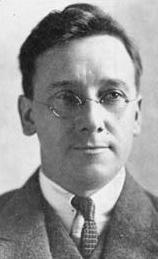
Though the march did not achieve all of its aims it has been described by the BBC as "a milestone in the history of the [[disability rights movement]]".[ The [[Blind Persons Act 1920]] was the first disability-specific legislation anywhere in the world.][ The act required local authorities to "promote the welfare of blind persons" and reduced the pension age for blind men from 70 to 50. The NLB feared that the act would simply allow local authorities to sub-contract their responsibilities to the charities that they opposed. The NLB later passed a motion of dissatisfaction in the government's response to the march.][ Purse changed his views and became more favourable to the charities, this was not compatible with the NLB's position and he left the organisation in 1920, founding the National Union of the Industrial and Professional Blind (which continues, as of 2020, as the [[National Federation of the Blind]] advocacy group).] |
|
Though the march did not achieve all of its aims it has been described by the BBC as "a milestone in the history of the [[disability rights movement]]".[ The [[Blind Persons Act 1920]] was the first disability-specific legislation anywhere in the world.][ The act required local authorities to "promote the welfare of blind persons" and reduced the pension age for blind men from 70 to 50. The NLB feared that the act would simply allow local authorities to sub-contract their responsibilities to the charities that they opposed. The NLB later passed a motion of dissatisfaction in the government's response to the march.][ Purse changed his views and became more favourable to the charities, this was not compatible with the NLB's position and he left the organisation in 1920, founding the National Union of the Industrial and Professional Blind (which continues, as of 2020, as the [[National Federation of the Blind]] advocacy group).] |
|
|
|
|
|
The march helped inspire the more famous, but less successful, 1936 [[Jarrow March]] against unemployment.[ The NLB joined the 1936 [[Jarrow March]] to highlight the plight of unemployment among blind people which had reached 35,000 out of 40,000 during the [[Great Depression]].][ The NLB merged with the [[Iron and Steel ]Trade Confederation]] in 2000 and is now part of the trade union [[Community (trade union)|Community]].[ The RNIB marked the centenary of the march in April 2020. Though their plans were curtailed because of the [[COVID-19 pandemic]] the RNIB urged people to use their daily permitted exercise during the [[COVID-19 pandemic in the United Kingdom|virus control lockdown]] to take steps significant to them and record it on social media.] |
|
The march helped inspire the more famous, but less successful, 1936 [[Jarrow March]] against unemployment.[ The NLB joined the 1936 [[Jarrow March]] to highlight the plight of unemployment among blind people which had reached 35,000 out of 40,000 during the [[Great Depression]].][ The NLB merged with the [[Iron and Steel Trades Confederation]] in 2000 and is now part of the trade union [[Community (trade union)|Community]].][ The RNIB marked the centenary of the march in April 2020. Though their plans were curtailed because of the [[COVID-19 pandemic]] the RNIB urged people to use their daily permitted exercise during the [[COVID-19 pandemic in the United Kingdom|virus control lockdown]] to take steps significant to them and record it on social media.] |
|
|
|
|
|
== References == |
|
== References == |

 Like
0
Like
0
 Dislike
0
Dislike
0
 Love
0
Love
0
 Funny
0
Funny
0
 Angry
0
Angry
0
 Sad
0
Sad
0
 Wow
0
Wow
0







